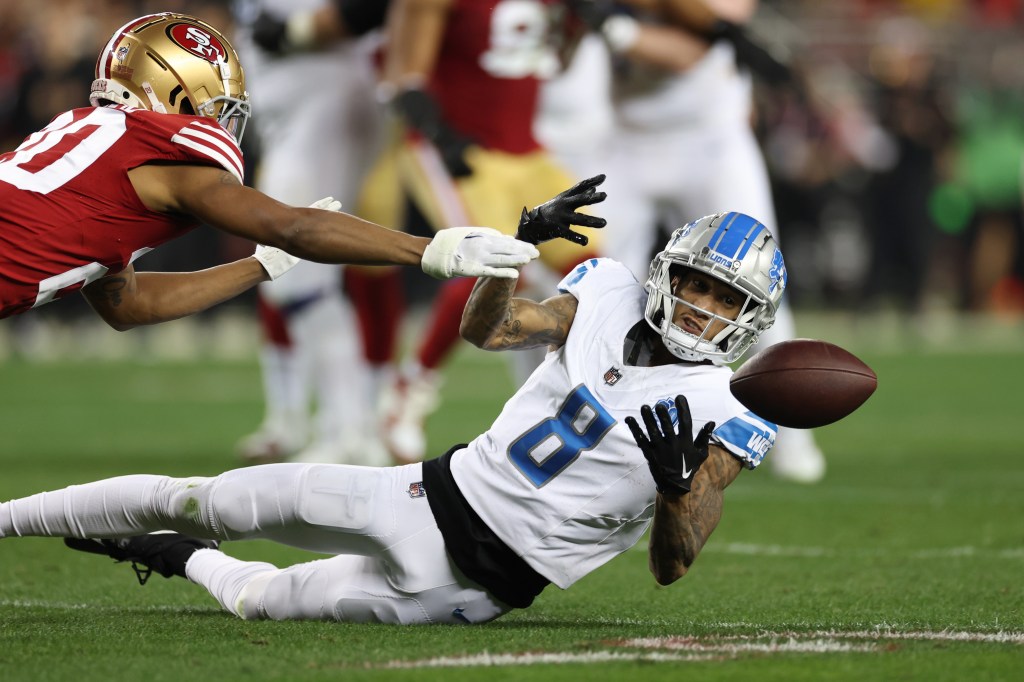
Interestingly enough, this article idea initially sparked my interest in creating ‘It’s a Numbers Game’. I was suffering through the previous NFL season, not only because my Patriots were abysmal, but also because so many games were being blown due to aggressive game-time decisions. Situations where a team decided to go for it on fourth-down instead of kicking the field goal, and then subsequently fail to convert and lose by less than three plagued my mind. Maybe it is because I grew up with Bill Belichek’s conservative play-calling and style of play, where field position and special teams were integral parts to team success. However, it happens so often and although I cannot disregard the increasing aggressiveness as a coaching trend of the last half-decade, I truly believe that teams’ reliance on real-time analytics are to blame and fail to take in all the context and unpredictability of the sport when making crucial decisions.
Now, let me just say that this post by no means denounces my affinity towards data analytics in sports. On the contrary, I believe that analytics are great for sports because they:
- Improve and optimize roster creation (especially with a capital constraint)
- Enhance player evaluation
- Aid decision-makers with reliable data that tell a greater story (coaches, executives, etc.)
- Improve injury prevention
- Uncover inefficiencies in one’s team or one’s competitors to assist in game strategies
However, in this article, I want to dive in on two important factors that I believe get overlooked when using analytics: the importance of risk (more specifically, the risk-reward tradeoff) and the unpredictable nature of the game.
In-Game Analytics in Football – Focusing on Fourth Down Decisions
In-game analytics in football touch every play and decision made. Whether a team runs the ball, throws the ball, goes for it on fourth down, kicks a field goal or punts, the decision is supported by the analytical data with the goal of winning. Especially with so many different possible play combinations (from that of the offense and defense), relying on real-time analytics has become the most optimal method of play calling and decision making. In my opinion, the biggest and by extension, most consequential, decision has been what to do on fourth down.
Over the past couple years, the approach to fourth downs have shifted, with more teams and coaches adopting a more aggressive style. Obviously, teams have generally gone for it on fourth down when in a desperate situation to extend drives. Now however, teams have been more willing to go for it not solely in these desperate situations, but when on their own side of the field or with a lead late looking to ice the clock. The three teams who exemplified this trend best were the Detroit Lions, Philadelphia Eagles and Miami Dolphins. Dan Campbell’s Lions are probably the pioneers of this aggressive style of play calling, using fourth down to continue drives and build positive momentum, whether through traditional or trick plays. The Eagles birthed the ‘Tush Push’ fourth-and-short strategy, converting 92.5% of fourth-downs in 40 attempts during the 2023 season. This was different from the Lions whose strategy seemed a bit reckless, as the Eagles would play to their biggest strength – the offensive line. I threw Miami in there too because they would always do wonders against my Patriots, extending drives with so many playmakers with yards-after-the-catch ability.
And the data support this trend, to the point where aggressiveness was somewhat synonymous with analytics. According to an article on Sporting News, fourth down attempts and conversion have virtually increased year after year over the past couple decades, as analytics have become more mainstream (Sutelan, 2023).

The Importance of Risk and Risk-Reward Tradeoff
I wanted to reiterate one of the points I made earlier, how this increase in attempts is partially because teams are more willing to go for it on fourth down at any point in the game, virtually wherever on the field and as a strategy to close games. This is in stark contrast to pre-2015, where I felt like I saw fourth down attempts only being used as measures of desperation to keep drives alive late in the game. Now, a team could have a 4th and 1 at their own 45 in the middle of the second quarter, but still decide to go for it rather than punt because that’s their team approach supported by analytics. In fact, the article in Sporting News has a neat graphic which displays which decision should be made based on the down-and-distance and where the ball is on the field. It found that teams should go for it on 4th and 1 in every instance within 91 yards to the endzone (essentially excluding one’s own 1-9 yardline) (Sutelan, 2023). This aggressiveness and effective fourth down play calling has made going for it on fourth down almost like a winning strategy, allowing teams to extend drives, control time-of-possession and tack on extra points throughout the entire game.
Obviously, the context of the situation does step in in most cases, especially early in games, with coaches letting the game play out and electing to punt the ball or kick a field goal if in the opponent’s territory. However, too many times it seemed like coaches were willing to gamble on a high risk, high reward position, rather than a medium-risk medium-reward position, leaving many watching absolutely dumbfounded. In many cases, a coach’s eyes get too large for their stomach, and when they see an opportunity to extend one’s lead out of reach, they fail to consider the opportunity cost of such a decision.
We all remember the 2024 NFC Championship game, the Detroit Lions vs the San Francisco 49ers. The Lions had a 14-point lead midway through the third quarter and were approaching the 49ers red zone. On 4th and 2, Dan Campbell was faced with a decision: kick the field goal and extend the lead to three scores or go for it and try to extend the lead to three scores. A 17-point lead or a 21-point lead were the two choices, being up by three touchdowns or two touchdowns and field goal. The biggest decision until that point of the game was should we have a three-score lead or should we have a three-score lead with some flair in front of the San Francisco faithful. Most would say that they are virtually the same thing, and in fact, most would consider the risk of a continued two-score game as more significant than the four extra points earned from a touchdown. I wanted to highlight this fact because it makes what transpired truly dumbfounding.
The Lions had a comfortable lead with momentum, and it was determined that the potential gains of the decision outweighed the opportunity cost leaving potential points on the board. With a cushion to mitigate the risk, featuring a team that had went for it on fourth down the second most in the NFL (40 times at a 53.33% success rate) and a coach who injected an aggressive mindset into his team, Dan Campbell made the decision to send the offense on the field, relying on the analytics and his coaching intangibles. Ultimately, Jared Goff would throw an accurate throw but was dropped (I think the image I used for this article is of that drop), and that was that, no points but still up by 14. This would all change almost instantaneously as after three minutes and 56 seconds of game clock, the game was tied at 21 after two quick touchdown drives coming off the turnover on downs and a lost fumble on their next drive.
History repeated itself really quickly as the Lions, now losing 24-27 in the middle of the fourth quarter, found their way into another fourth down in 49ers territory. This time it was 4th and 3, and a 47-yard field goal seemed like a shoe-in to at least be attempted in order to tie the game at such a crucial point in the game. Yet, once again, instead of being content with the points and the all-important prospect of tying the game, the Lions would double down and Jared Goff would remain under-center, throwing another incomplete pass, essentially ending the game. The Lions would end up losing 34-31, with the six points looming large that they willingly passed up in the middle of the third and fourth quarter.
This example, despite being long, highlights a pivotal game where the shifting aggressive playstyle, rooted in analytics, cost a team a trip to the Super Bowl. The Lions had two chances to go for the medium risk and medium reward option and instead opted and doubled down on the high risk and high reward option and paid dearly. It is all so fascinating because it shows just how much value converting the fourth down can have, but also fails to consider the tangible value of getting points on the board, albeit with a lesser positive award than the riskier option.
This risk-reward tradeoff really intrigues me when using in-game analytics in football in particular, compared to other sports like baseball. Baseball, which got introduced to analytics much earlier than football, uses analytics to determine fielding position, pitch selection and aid in roster management strategy. Regarding analytics’ role in evaluating risk-reward situations, both sports differ in sample size, which is why I believe the risks are better understood in baseball, and therefore, analytics are more effective. In football, the analytics may tell you to make a certain decision, but that fails to account for the plethora of intricacies in one entire play. Most likely, the sample size in this situation is one, considering offensive and defensive alignment, as well as field position and the game clock. Because of this, I believe in-game decisions in football naturally inherit more risk than decisions in baseball, where one can generate a greater sample size and reliably and justifiably, fall back on the analytics to make sound and rational decisions.
It is worth noting that without taking context into the situation, Sporting New’s fourth down conversion chart would have said to go for it on both occasions, with both field position and yardage to go considered. However, solely basing one’s strategy of being an aggressive team with a ‘No regrets’ mentality because the analytics justify it, creates this bias that very easily can lose teams games. I use this lengthy example because despite how ridiculous everything transpired, I believe that this aggressive, follow-the-analytics game strategy will continue to be popular into the coming seasons. And because of that, the risk of such a powerful decision has to be weighed and the most negative outcome must not get overshadowed by the high reward outcome.
The Unpredictability of the Game
I’m going to circle back again to the first fourth down attempt in the Lions-49ers game, where if it wasn’t for a dropped pass on an accurate throw, we would not be using this example as the catalyst for this article. This brings up the second factor that I believe gets overshadowed when making analytical decisions, the sheer unpredictability of the game. There are so many moving parts in one particular play on both sides of the ball, where the slightest imperfection can derail an entire play. A slightly erratic snap by the center can disrupt the timing of the entire play or a free blitzer moves the quarterback in the pocket, making accomplishing the objective much more difficult. A receiver can be wide open for a ball, and just drop it as we saw in the Lions game. On the other hand, the issue can be totally out of anyone’s control and the receiver can stumble or fall, leading to an incomplete pass despite being wide open. The same mistakes can be said on the defensive side of the ball that the offense can capitalize on, but in these situations, it is the job for the offense to get the job done.
My opinion: Analytics should not be the sole driver of decision making when there are too many variables that require perfection. Analytics are supposed to aid in decision-making, to make an imperfect and unpredictable game easier to understand. However, when there are so many variables as in football, it unrealistically simplifies these factors, creating a bias that essentially fails to consider them as fundamental in critical decision making situations.
Bringing it back to baseball, the sport has much fewer variables per pitch, and therefore, analytics can provide a reliable blueprint, based on past history, on how to approach each pitch to get a favorable outcome more often than not. Baseball features one-on-one matchups between hitter and pitcher, making it much easier to create a plan for every battle and fully understand his player profile. With the only variables being the hitter, pitcher and fielding position, teams can trust these analytics because there are not as many moving pieces that can hinder success.
Conclusion
The point of the article was not to delegitimize the use of analytics in sports, and in this particular case football, nor the acceptance of analytics to aid in-game strategy. However, the main idea I felt like I needed to convey is that relying on analytics without consideration of key factors like the risk-reward tradeoff, the context of the situation and the infinite permutations of playcalling, puts too much power on a number that informs decision making. Especially when that power is not limited to costing a team a Super Bowl appearance, I hope that teams and coaches reevaluate fourth down decisions, with all these factors in mind.
Work Cited
Sutelan, E. (2023, Jan 4). NFL 4th down conversion chart, explained: Breaking down the NFL’s success rates by distance & more to know. Sporting News. Retrieved Apr. 11, 2024, from


 It's a Numbers Game
Leave a comment