
So far writing for ‘It’s a Numbers Game’, I have discussed the role of data and analytics for the on-the-field product. I’ve tackled how analytics assist in team building and decision making during the game. However, data’s role expands much further from the game on the field, court or ice. The sports industry, like all industries as they evolve into the digital age, also leverages an absurd amount of consumer data to create more meaningful sports experiences, deliver personalized and engaging content, and better target their audience for promotions. Unlike the games and teams they promote, sports marketers have no offseason, and therefore, must take advantage of data year-round to engage with their fans authentically and increase fan affinity to the sport, team, or player.
For this article, I was able to speak with Moses Altsech, a Marketing professor at the University of Wisconsin – Madison who has taught both Sports Marketing and Consumer Behavior, to get his insights on data’s profound impact in sports marketing. I will be referencing paraphrased ideas and details of the conversation within the article.
Memorable Viewing Experience
In the digital age we are currently living in, getting people off their phones to enjoy the sports viewing experience has been top priority for sports marketers. Especially since the pandemic, attracting people to the in-person viewing experience has been the main hurdle to overcome. As a result, sports organizations have built just that to counter the tendency to stay home. No state, in my opinion or Moses’, has done it better than Wisconsin. The Milwaukee Bucks were one of the first organizations to establish a community or neighborhood around the stadium, known as the Deer District. With shopping malls, nice restaurants and a fun atmosphere, fans are able to enjoy the in-person viewing experience before and after the game, and remain engaged with the organization the whole time. Fans leave the Deer District feeling like going to the Bucks game was worth the money and very fun, which enhances the positive perception of the organization. The Green Bay Packers have also done the same thing with Titletown. As someone who went to a Packers game fairly recently, Titletown enhanced the in-person experience ten-fold. My dad and I were able to walk around the stadium, enjoy some alcoholic beverages and engage with the local fans. With beer gardens, a football field for anyone to use and quality restaurants set up around the neighborhood, I was having so much fun before I had even entered the stadium.
Additionally, data has allowed marketers to attract new audiences to the in-person experience or broadcast. In the most recent Super Bowl, the NFL partnered with Nickelodeon to create a kid-centric broadcast in order to create fans of the sport from a young age. With Spongebob and Patrick in the play-by-play booth, animations using virtual reality and augmented reality, and appearances from some of your favorite Nick characters, the Nickelodeon broadcast was a complete success. During the game, social media was going crazy in the best way possible, with Tik Toks and Instagram videos garnering tens of thousands of likes and comments for their praise of the broadcast according to USA Today. Many of those were non-sports fans finding refuge in the highly entertaining broadcast, which provides marketers with another opportunity to reach a greater audience. What I found interesting from the broadcast was that they used this platform to effectively explain the rules of football to the audience using characters from their favorite TV shows.
This is not the first time a partnership like this has happened, as earlier in the season, the NFL carried out a Toy Story broadcast in a partnership with Disney, with the goal of sparking fandom of the sport with the younger audience. As a result of partnering with kid-centric organizations, according to the NFL and Nielsen, the audience share for ages 2 to 11 was up 4% while 12 to 17 increased 5% (Reedy, 2024). This strategy was very wise as the ROI on these broadcasts were immense, essentially engaging kids at a young age and creating fans for life in the process.
Engaging Content
Data allows for more engaging content that the target audience will actually enjoy and not find generic. The marketers behind your favorite sports franchises are devising creative ways to spread their content through social channels, like Tik Tok. With trends going viral everyday and around 150 million active users on the app (GilPress, 2023), marketers are able to translate these trends within the organization to share in the riches of Tik Tok. This is commonly seen through games with players like asking players which member of their team would you not want to babysit your child. While it may appear silly and not sports-related, marketers understand that this is the content that is received well due to its authenticity, and with that, gets the likes, comments and shares necessary to justify the marketing effort. With over half of Gen Z possessing the app (GilPress, 2023), the same people who will have the most purchasing power in the upcoming decades, Tik Tok helps reach sports fans and non-sports fans alike who might spend money towards the brand in the future.
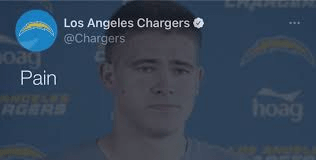
Additionally, sports organizations are engaging in similar behavior as the average social media user, posting memes, reacting to content and connecting with others. One organization that stood out to me was the Los Angeles Chargers, who routinely understand their brand in the NFL as a team who cannot get anything right and lose games in the most unbelievable way possible. All they needed to do was tweet the word ‘Pain’, and the Internet took it from there. While this would not be fun for a Chargers fan, the rest of the world laughed at the post, and laughter turned into engagement, which is what these marketers were looking for.
Lastly, the adoption of AI technologies have and will continue to revolutionize how we consume content as sports fans. Many fans want to deep dive into their favorite sports, teams and players, and in 2024, expect real-time analytics and insights to learn more about the intricacies of what they are interested in. This information can assist in other fan ventures, like fantasy sports and sports betting. According to a Forbes article on AI and fan engagement, “data is food for AI”, which allows AI to identify patterns or valuable insights more efficiently than humans (Hensley, 2022). As a result, AI allows marketers to better understand their fans and therefore, can push more relevant content that these fans actually want to consume. In addition, AI enables sports broadcasters, analysts and fans alike to find the hidden story faster than ever (with data tools like Next Gen Stats from Amazon or Statcast from the MLB), creating a more comprehensive content consumption experience.
Improved Targeting
Finally, data allows organizations to find the dedicated fan, who is seeking more engaging content about the organization. If they have their sports team’s app, subscribe to a newsletter or have season tickets, marketers have the data and know that these fans may welcome exclusive content, behind the scenes looks and interviews with their favorite coaches and players. Data allows for fan segmentation, as not all fans are alike in their wants, needs and expectations. The casual fan who goes to one Chargers game once every two years may not be the person to target, however another fan with season tickets for the past 4 seasons living in the Los Angeles area might be the type of person marketers push an in-person event to because the data shows that fan will be more engaged than the former.
In the digital age, many sports organizations have their own mobile apps as well, which not only eases the fan experience from the fan perspective, but also aids marketers by providing them with very measurable data. Apps allow for complete data transfer and insights, meaning that these teams can track how long you have been on the app, what pages you clicked on and how long you stayed on those pages. Through the app, marketers are able to essentially create a fan profile, and then can push marketing efforts according to their recent behavior for the most engaging results. This allows for more purposeful marketing, with the greatest chance of conversions.
With this immense collection of data must come the controversies as well. Concerns over digital privacy have been prevalent and are reasonable as is with any organization’s efforts to collect data. Additionally, as Moses put it in my interview, ‘too much data can become a swamp’, meaning it can be hard to find meaning from data when there is just way too much, therefore rendering it less useful. To drain this swamp, Moses suggests that AI will play a pivotal role, sifting out the irrelevant data to form comprehensive summaries and insights of what is important. Both of these concerns are true, and we will have to wait and see how marketers are able to combat these challenges.
What Can the Fan Experience Look Like in 2030?
Evidently, data has and will continue to have a huge part in enhancing fan experiences and engagement in the near future. In my conversation with Moses, I ended it with the question, ‘What do you think the fan experience can look like in 2030?’ I thought I would share his response as a fitting conclusion to this article:
- Expect to see a greater adoption of technologies like artificial intelligence (AI) and virtual/augmented reality (VR/AR)
- Improved on-site experiences through a similar adoption of stadium neighborhoods that foster engagement before, during and after the game
- Purposeful efforts to engage those not into sports (or not into sports yet) as they represent an untapped market with potential
- Continued integration of streaming platforms in the sports viewing experience
Work Cited
GilPress. (2023, November 9). Tik Tok statistics for 2024. What’s the Big Data. Retrieved Mar. 13, 2024, from
https://whatsthebigdata.com/tiktok-statistics
Hensley, N. (2022, September 23). The role of AI in sports fan engagement. Forbes. Retrieved Mar. 13, 2024, from,
Reedy, J. (2024, Februrary 10). From Spongebob to Tik Tok, leagues and broadcasters using many methods to attract, retain young fans. Associated Press. Retrieved Mar. 13, 2024, from
https://apnews.com/article/nfl-super-bowl-nickelodeon-8ceff4f753d8e3e58e5f818aa0ac1a79

 It's a Numbers Game
Leave a comment